I almost didn’t go. Saturday mornings have a way of convincing you the couch is the better option. But I’d been seeing chatter about the IEEE ENCS Leadership Summit for weeks, and the fact that it was happening right at Duke made it hard to justify skipping.
I’m glad I didn’t.
I got there early enough to grab a decent seat in the lecture hall. It’s one of those tiered auditoriums with the wooden fold down seats, the kind that makes every event feel a little more serious than it probably needs to. The IEEE banner was set up on a table at the front, and people were filtering in slowly, coffee in hand, the usual pre conference small talk filling up the room.
Chips, supply chains, and things I hadn’t thought about
The first session caught me off guard. I was expecting something heavy on theory, but the speaker dove straight into the semiconductor supply chain, specifically how the chips in an iPhone 15 come together from all over the world. Memory chips from Japan’s Kioxia. Radio frequency components from Skyworks out in California. Audio chips from Cirrus Logic down in Austin. And then Apple’s own processor, designed in house in Cupertino but fabricated elsewhere.
What stuck with me was this idea of “off shelling,” where critical components get sourced and assembled across so many borders that the whole concept of a single country “making” a device becomes almost meaningless. I think about supply chain risk a lot in my own work, but mostly from a data and model perspective. Seeing it laid out in terms of physical hardware was a useful reminder that fragility isn’t just a software problem.
The speaker also walked through the front end of semiconductor manufacturing, and honestly, the precision required at every step is something I don’t think most people in AI appreciate enough. We talk about compute and model architectures all day, but the silicon underneath all of it is its own world of complexity.
The AI session that hit close to home
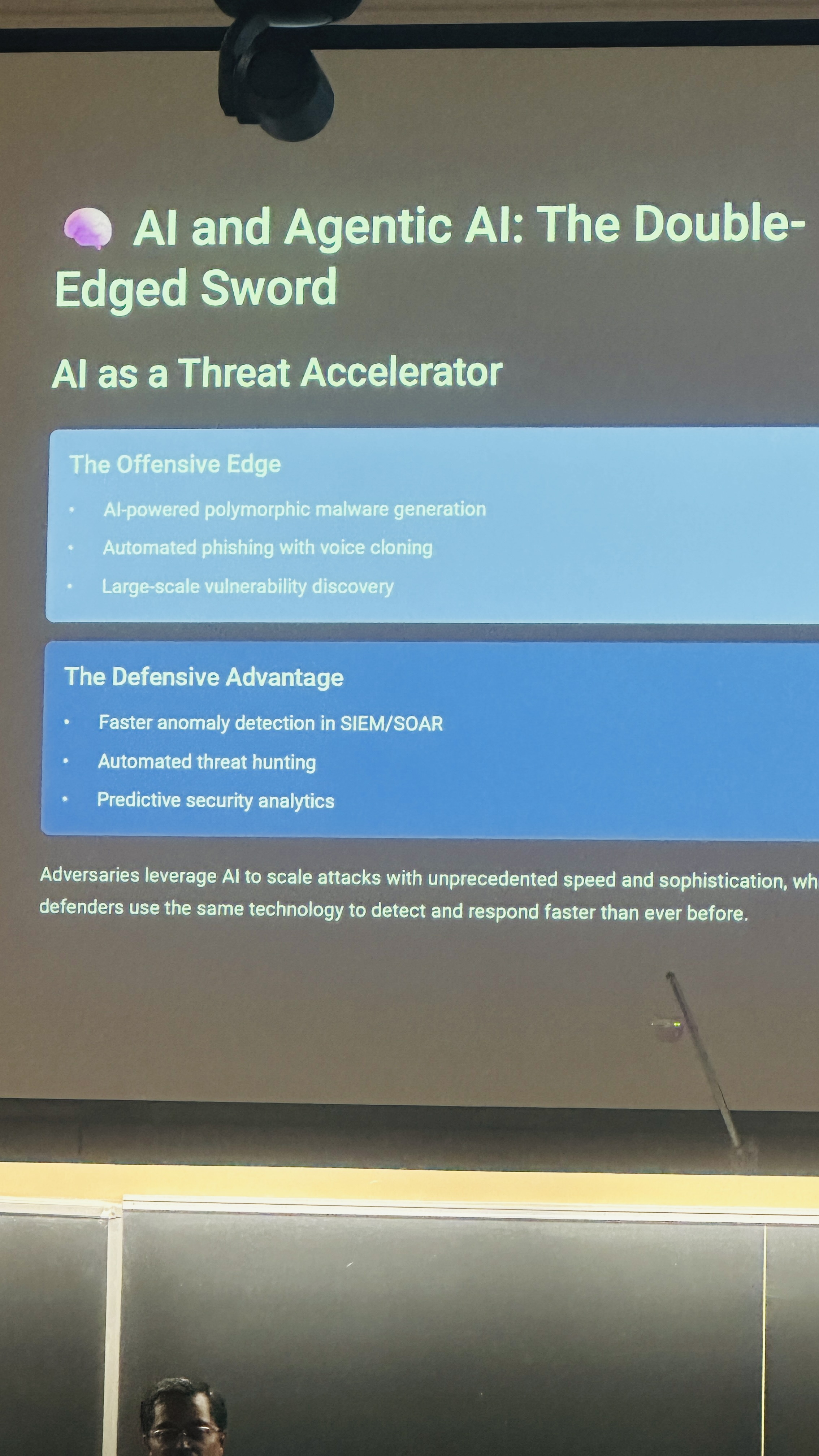
Then came the talk I’d really been waiting for. The slide said “AI and Agentic AI: The Double Edged Sword” and the speaker framed AI not just as a tool, but as a threat accelerator. On one side, adversaries are using AI to generate polymorphic malware, automate phishing with voice cloning, and discover vulnerabilities at scale. On the other side, defenders are using the same technology for faster anomaly detection in SIEM and SOAR platforms, automated threat hunting, and predictive security analytics.
This resonated with me more than anything else that day. At IBM, a lot of what I think about is how AI systems can be both powerful and risky at the same time. The speaker made a point that stuck: adversaries and defenders are essentially in an arms race where both sides are leveraging the same underlying technology, and the gap between offense and defense keeps narrowing. That framing is something I want to carry into my own research on AI governance. It’s not enough to build safe systems if the threat landscape is moving just as fast.
Recognizing the people behind the work
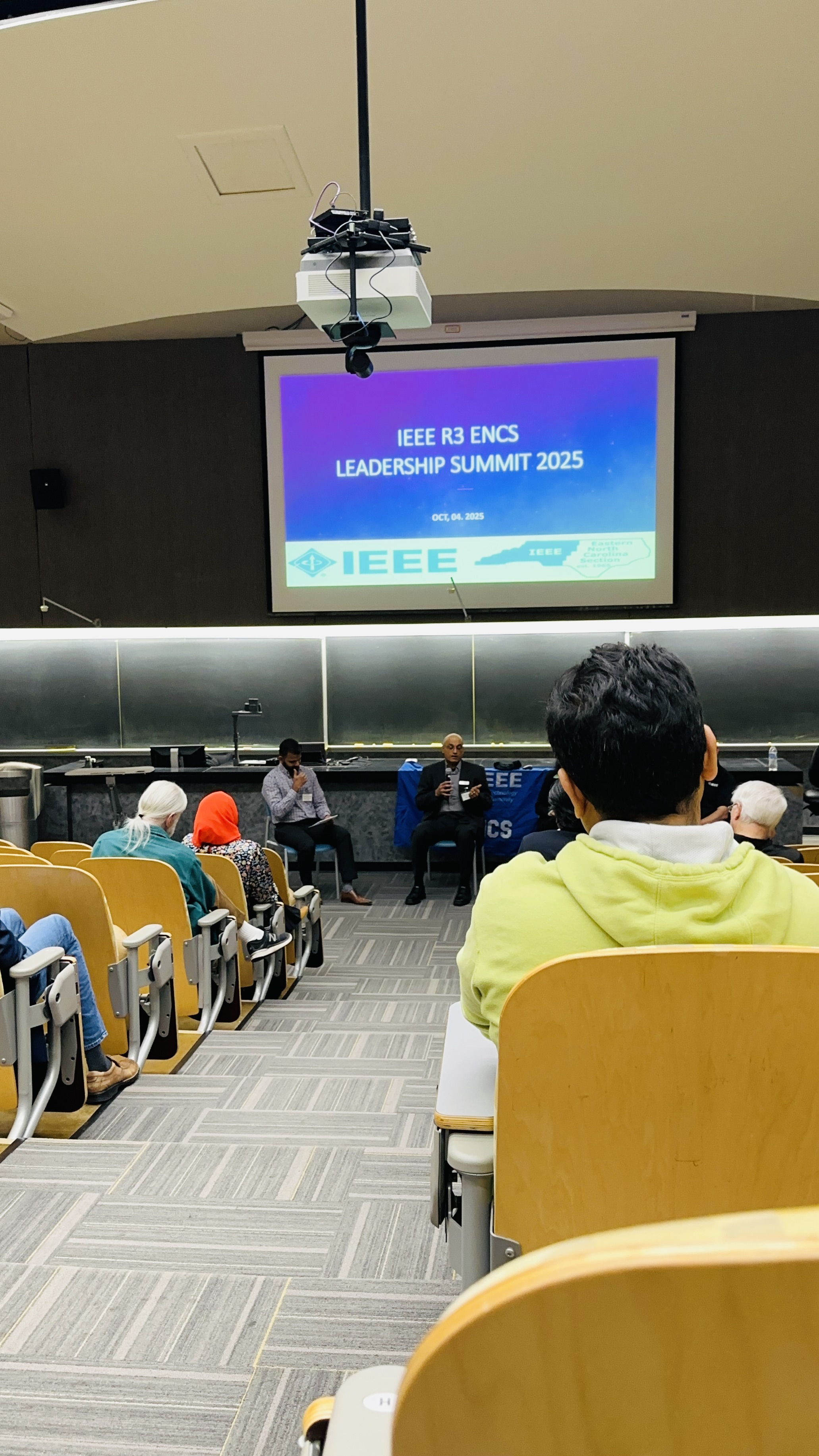
About halfway through the day, the mood shifted from technical talks to something more personal. They started the awards and recognition ceremony, and this is where the event really showed its heart. I watched from my seat as several people were called up to the front to receive certificates for their contributions to the section.
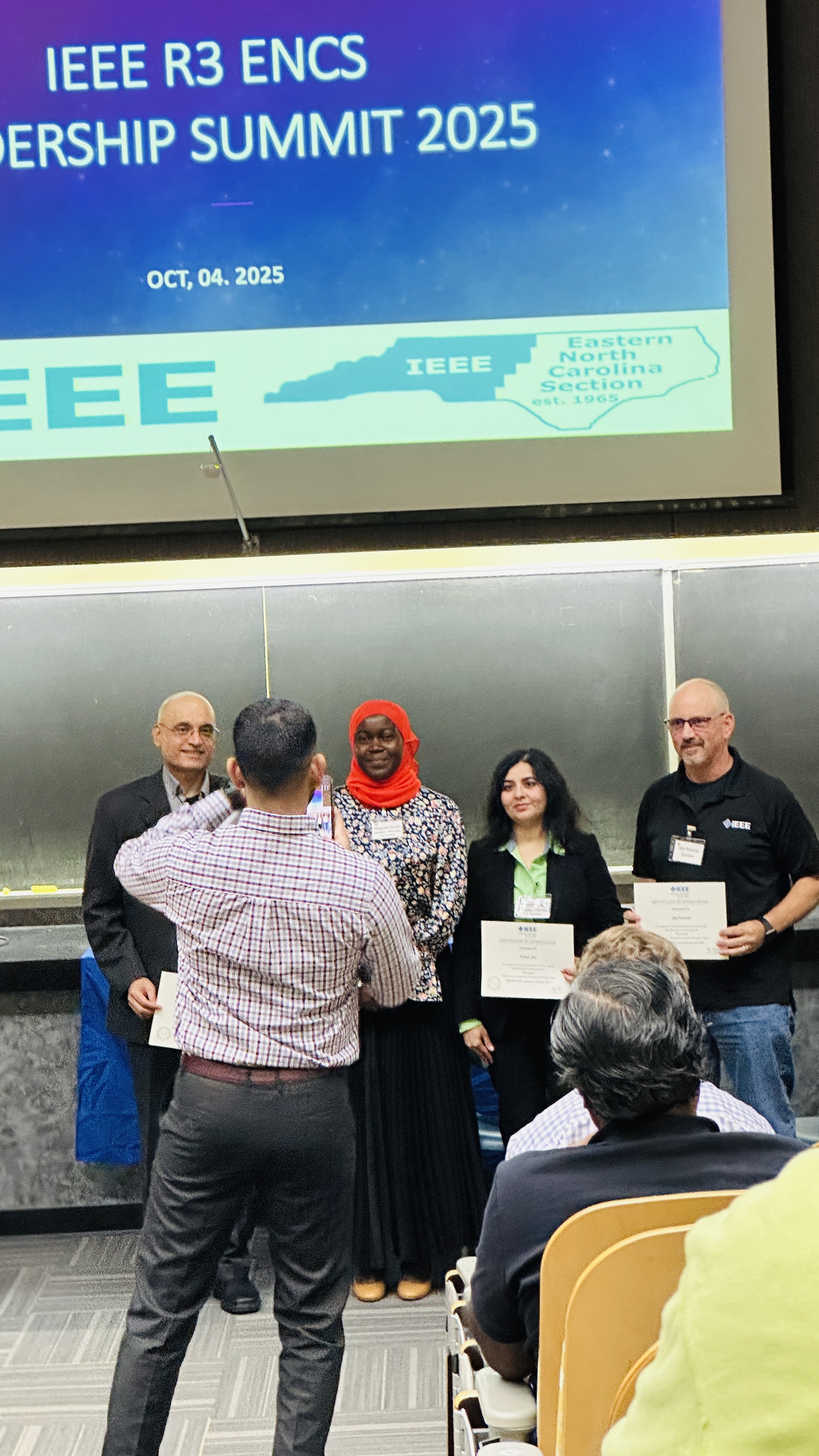
There was something genuinely moving about it. These weren’t big flashy corporate awards. They were people who had volunteered their time, organized events, mentored students, and kept the local IEEE community alive. The room was small enough that you could feel the warmth when someone’s name got called. People clapped, took photos on their phones, and you could tell the recipients were proud in that quiet, earned sort of way.
I didn’t know most of them personally, but sitting there watching the ceremony reminded me that the technical community runs on people who show up consistently, not just the ones who publish the most papers or give the keynote talks.
Publishing, LaTeX, and the research loop
The afternoon sessions pivoted to something more directly relevant to my day to day: publishing. One speaker walked through IEEE’s open access options, breaking down the difference between fully open access topical journals, hybrid journals with over a hundred options, and IEEE Access, which functions as a mega journal covering practical research across all fields. It was a useful overview, especially for anyone early in their publishing journey who might not realize how many avenues exist beyond the obvious big name venues.
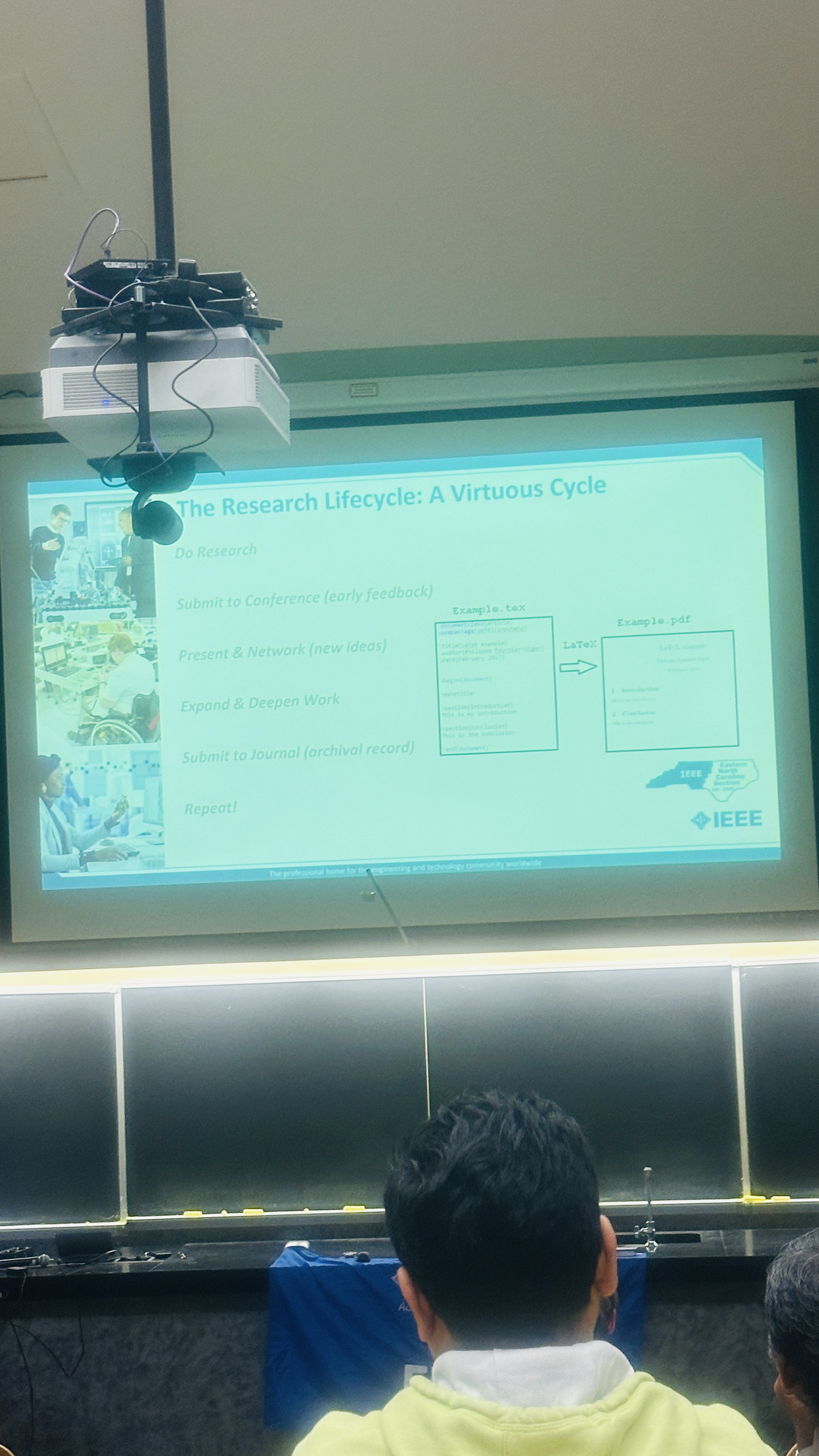
But the slide that really landed for me was “The Research Lifecycle: A Virtuous Cycle.” It laid out the loop so simply: do the research, submit to a conference to get early feedback, present and network to gather new ideas, expand and deepen the work, then submit to a journal for the archival record. And repeat. They even showed a LaTeX template on screen, which got a few knowing laughs from the audience.
I’ve been through this cycle enough times to know it’s never quite that clean, but seeing it presented as a deliberate, repeatable process was a good nudge. I’ve been sitting on a couple of ideas that I keep telling myself aren’t ready for a conference submission yet, and this talk was a reminder that the whole point of conferences is to get feedback on work that isn’t finished. That’s the part I sometimes forget.
Walking away
I left Duke that afternoon with more energy than I had walking in, which is saying something for a Saturday. The summit wasn’t massive, maybe a few dozen people in the room, but that’s exactly what made it valuable. The talks were specific enough to be useful and broad enough to spark new thinking. The people were approachable. The Q&A sessions after each talk felt like actual conversations rather than the performative question asking you sometimes get at bigger conferences.
If you’re in the Research Triangle area and you’re an IEEE member (or even if you’re not yet), I’d genuinely recommend keeping an eye on what the Eastern North Carolina Section puts together. These aren’t the events that make headlines, but they’re the ones where you actually learn something and meet someone worth knowing. That’s worth a Saturday morning any time.